
Legal

FOIA, Open Meetings Act and Public Access Counselor opinions.
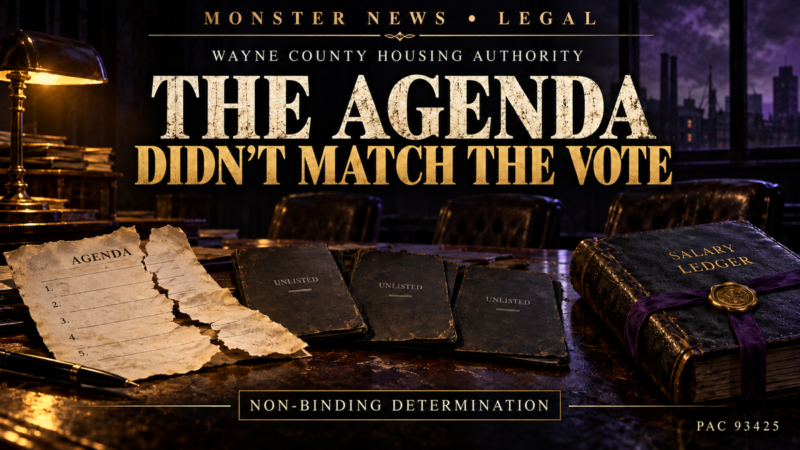
WCHA Voted on Business the Public Was Never Told Was Coming.
Three unlisted items. An inadequate salary recital. Illinois found violations, even after WCHA went back and re-voted.
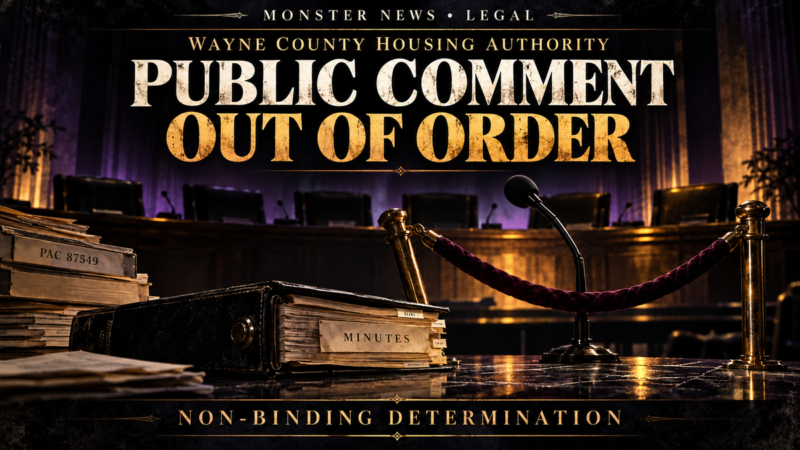
WCHA Could Not Follow Its Own Public-Comment Rules.
A hostile meeting became a state review. Illinois found that WCHA failed to follow its own established order for hearing the public.
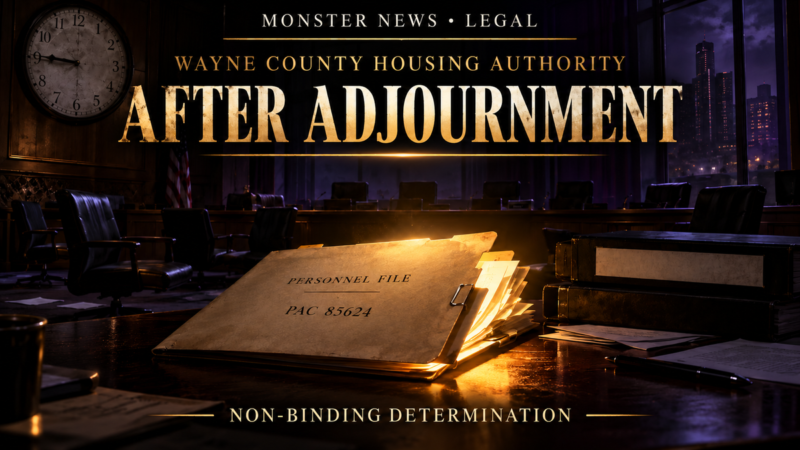
WCHA Adjourned. The Hiring Discussion Kept Going.
The executive director admitted the discussion continued after adjournment. Illinois found an open-meeting violation.
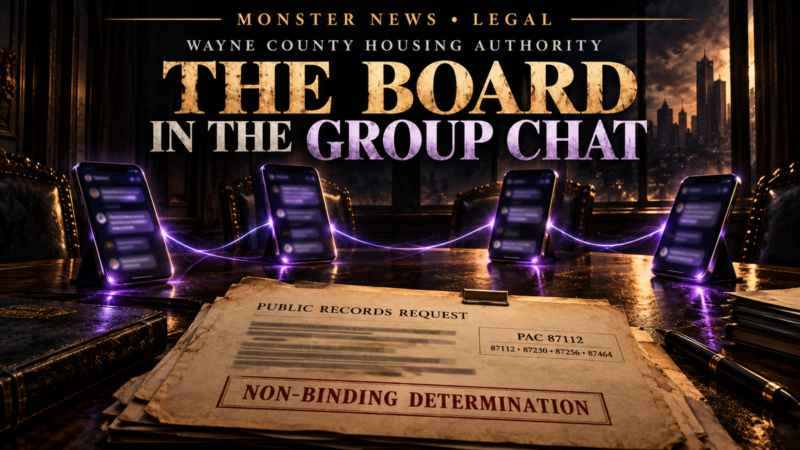
WCHA Discussed Public Business by Text. Then It Failed to Give PAC the Messages.
Four complaints, repeated state requests and missing underlying messages. WCHA’s own defenses exposed a fundamental misunderstanding of open government.

WCHA Barred Baker From Future Meetings. After PAC Contact, It Lifted the Ban.
A written exclusion from future board meetings was reversed after the Public Access Bureau became involved.
WCHA Supplied Part of Its Grievance Policy. PAC Review Ended With the Rest.
A resident challenged a partial policy response. WCHA supplied the full grievance procedure, and the Public Access Bureau closed the file.
WCHA Did Not Have to Answer Kathy Sands. That Does Not Make Silence Good Government.
Illinois rejected this public-comment complaint. The record still shows the distance between meeting the legal minimum and answering the public.

The WCHA Privacy Decision That Did Not Find a Violation.
The PAC record includes a privacy outcome supporting limits on disclosure. Residents’ information deserves protection, even in an accountability investigation.

After the Restraint-Chair Investigation, Madison County Tried to Withhold the Newer Reports.
Earlier jail records supported investigative reporting. A later blanket denial brought a binding order to release newer incident reports.
Chicago Sent the Emails to a Lawyer. That Did Not Make Them Privileged.
Contractor correspondence did not become attorney-client communication simply because it was later forwarded for legal advice.
Chicago Withheld the Drainage Maps. This Time, the PAC Said It Could.
Opinion 26-009 upheld withholding of detailed drainage-infrastructure locations. The statutory exemption—not a general appeal to secrecy—decided the case.

Sherrard Ignored the Records Requests. Then It Ignored the PAC.
Two requests, repeated state inquiries and no documented response: the record behind Sherrard’s binding FOIA violation.