
400 Acres, a Free Permit, and a Silencer

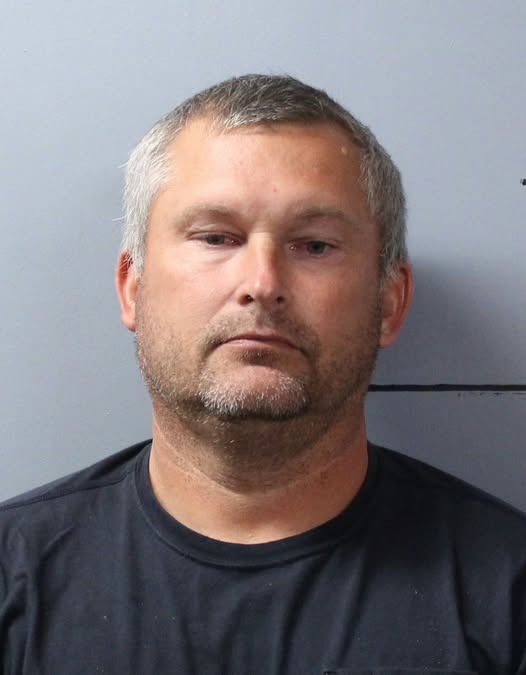
WAYNE CITY, Ill. — The deer was never the interesting part. Steven K. Manning, 45, of Wayne City, was booked into the Wayne County Jail at 10:05 p.m. on Saturday, Oct. 10, on preliminary charges of unlawful use of a weapon and a wildlife-prohibited act, according to booking information reported by WFIW and carried by WEHT/WTVW. Illinois Conservation Police are seeking felony wildlife charges and a count of unlawful possession of a suppressor. He is not a private citizen caught up in an ordinary case. He was elected to the Wayne County Board in November 2024 to represent District 4 — Arrington, Four Mile and Orel townships — and he holds seats on the committees that handle the county’s money and the county’s jail. He is also, on the county’s own assessor rolls, one of the larger landowners in the corner of Illinois he helps govern. Those two facts are why this is on the front page. Not the deer.
The charge that has nothing to do with a deer
Of everything reported in this case, one allegation needs no farming, no motive, and no argument about herd management to explain. Under 720 ILCS 5/24-1(a)(6), it is unlawful in Illinois to possess “any device or attachment of any kind designed, used or intended for use in silencing the report of any firearm.” The penalty provision of that same statute makes it a Class 3 felony — two to five years. In certain places, including a school, a public park or a courthouse, the same conduct is a Class 2 felony carrying three to seven. There is no hunting exception in that subsection. No landowner exception. No exception for a county board member, and none for a man with a clean record. In Illinois, a silencer is contraband, and it is contraband for everyone — not merely for poachers, and not only for people with something else to hide. The Wildlife Code keeps its own rule about the same object. Under 520 ILCS 5/2.33(s), “It is unlawful to use a silencer or other device to muffle or mute the sound of the explosion or report resulting from the firing of any gun.” Two statutes, one device. That is how one case can produce a weapons count and a wildlife count at the same time. The felony label on the wildlife side is a separate question, and it is worth being exact about it rather than repeating it. The Wildlife Code makes ordinary violations of the taking rules misdemeanors under 520 ILCS 5/3.5(c), with the Class A tier — hunting after hours, or taking or pursuing wildlife with the aid of a vehicle or a light — carrying a fine of not less than $500 and not more than $5,000. A felony on the deer side takes more. 520 ILCS 5/2.36a makes it a Class 3 felony to take protected wildlife for profit or commercial purposes once the animal’s statutory value is reached, and the Code values a whitetail deer at $1,000, with restitution to the Department of $1,000 per antlered deer plus $500 for each antler point from eight to ten. It also makes repeated takings on different days inside a 90-day window a Class 4 felony when the totals cross the threshold. Whichever charge the state files, the case will be decided against a statute somebody can name out loud. None of this decides the case. Charges are allegations. Monster News has located no charging instrument, and a man accused is presumed innocent until a court says otherwise — a point this newsroom intends to keep repeating for as long as the case lasts. What the statute book settles is narrower and has been getting lost: the state did not have to invent a category to describe the thing it says it found.
The law had already given him a way to hunt that ground
Illinois does not treat wildlife as a crop belonging to the man whose field it happens to be standing in. Under 520 ILCS 5/2.1, the ownership of and title to every wild bird and wild mammal in the state is vested in the State, and the regulation and licensing of taking wildlife is an exclusive state power — one the statute says even a home rule unit may not touch. The deer in a Wayne County field is not the landowner’s deer. That is why owning the ground never worked as an answer to a hunting rule. §2.33(y) closes hunting between a half-hour after sunset and a half-hour before sunrise. §2.33(u) prohibits discharging a firearm within 300 yards of an inhabited dwelling without permission. §2.33(t) requires permission to take wildlife on another person’s land. Hours, seasons, limits and methods bind the owner standing on his own acreage exactly as they bind a stranger with a borrowed rifle. And Illinois does not make a landowner pay for the privilege of hunting his own ground. The Department of Natural Resources runs a resident landowner program that issues free deer permits to qualified applicants — a combination firearm permit carrying one either-sex and one antlerless-only tag — to landowners at or above 40 acres, with a 20-acre threshold in specified chronic wasting disease counties. Permits are valid on the permittee’s own property in open counties. A hunter still needs the license and habitat stamp the law requires of everyone else. Applications for 2026 had to be received and approved by Sept. 1. The Wayne County assessor’s roll carries 166.41 acres in the names of Steven K. Manning and Emily M. Manning in Four Mile Township for tax year 2025. Across three counties the recorded acreage in both names is 400.01. Monster News is not reporting that he failed to apply for a landowner permit; there is no record either way. What the record shows is the design of the law: for the man holding that ground, a legal path to a deer was open, and it was free. Nobody in this case had to choose between a freezer and a permit.
What the money says about the freezer
The most persistent claim circulating about this case is that it is about a man putting meat on the table. The land and payment records sit badly with that description. The assessor rolls for tax year 2025 show 400.01 acres of record across eight parcels in three counties — Wayne (166.41 acres), Hamilton (153.60) and Jefferson (80.00) — with both spouses’ names on every parcel, and improvements on only one of the eight. The Wayne County ground is new. County transfer history shows trustee deed 2026-1258, dated April 6 and sold May 1, 2026, with full consideration of $1,225,000 for the 166.41 acres — roughly $7,361 per acre, based on the recorded figures. The Hamilton and Jefferson parcels are long-held; the Jefferson roll notes “LY01 ADDED 2003,” and both Jefferson parcels’ 2025 taxes show as paid on Aug. 14, 2026, at $843.24 and $771.42. Separately, the Environmental Working Group’s Farm Subsidy Database attributes $77,467 in USDA payments to Steven Kyle Manning of Wayne City between 1995 and 2025 — commodity payments of $64,747 and disaster payments of $12,720, apportioned across Wayne ($65,312), Hamilton ($6,101) and Jefferson ($6,054) counties, the same three counties where land stands in his name. EWG matches names and addresses, not tax identification numbers, and these are not audited FSA figures. They corroborate farming activity in those counties. They do not establish title, and they do not bear on the criminal case. A man with 400 recorded acres, a $1,225,000 purchase this spring and a three-decade farm payment history is not a subsistence hunter, and nothing in the record suggests he needed a deer to eat. That is a statement about the record, not about motive. Motive is not an element the state must prove here, and Monster News asserts none.
The desk this case landed on
A county state’s attorney in Illinois is the civil legal adviser to the county board. In Wayne County, the office that would ordinarily review and file a conservation case arising in Wayne County is the same office that counsels the board on which Manning sits. Illinois law anticipates that situation. Under 55 ILCS 5/3-9008(a-10), the court — on its own motion, or on a petition by “an interested person in a cause, proceeding, or other matter” — may determine that the state’s attorney has “an actual conflict of interest in a specific case.” If the petitioner proves it by sufficient facts and evidence, the court may appoint another attorney to prosecute. Under subsection (a-15), the state’s attorney may simply recuse, and when that happens the statute says the court “shall appoint a special prosecutor.” And under subsection (a-20), before a private attorney is appointed, the court must contact public agencies — the Attorney General, the State’s Attorneys Appellate Prosecutor, neighboring state’s attorney’s offices — to find a public prosecutor who will take the appointment at no cost to the county. That detail matters here, because the loudest fiscal objection to a special prosecutor is usually the bill. The statute is written to avoid one. Monster News has found no public record that the state’s attorney’s office has sought a special prosecutor, that any court has been asked to appoint one, or that the board has taken up the question. That absence accuses no one: no request may be warranted, and none may be needed. It is simply the point where a routine conservation case stops being routine. A second proceeding has been reported as well: a forfeiture-of-seized-property case filed in Wayne County Circuit Court the Wednesday after the arrest. As of this writing, Monster News has located no docket number, caption, charging instrument, bail condition or court date.
The arguments, answered
The comment threads that followed the arrest have been busy exonerating him. The record answers most of it, so here it is, argument by argument. “He was feeding his family.” Four hundred acres against one deer. The freezer argument does not survive contact with a $1,225,000 deed. “The state is overcharging him to make an example.” The one charge in this case that carries prison time by statute is the suppressor — a Class 3 felony for anyone in Illinois, board member or not. That is not an example being made of anyone. That is the statute book. “He did the county a service — deer are a menace out here.” Crop damage and deer-vehicle collisions are real, and no one who has driven a southern Illinois county road at dusk needs convincing. But the state already answers that problem with permits and antlerless tags, which is how a herd gets managed: by counting it. An unpermitted deer is a deer nobody can count, and a herd nobody counts is a herd nobody manages. “If he worked at McDonald’s, this wouldn’t be in the paper.” Correct — and it is the wrong half of the comparison. A McDonald’s worker caught with a silencer in Illinois faces the same Class 3 felony. What changes with the office is not the statute. It is the standing: the state asks its officeholders to file a public statement of their economic interests every year by May 1 with the county clerk, and it treats official misconduct as a Class 3 felony that forfeits the office — 720 ILCS 5/33-3, a statute that reaches public officers and nobody else, and that is not charged in this case. Illinois does not hand officeholders a lower bar. It writes them a higher one. “Anyone can get railroaded.” Then the record is the defense, and the record is public — an assessor’s roll, a deed book, a circuit clerk’s docket, a state’s attorney’s file. Every fact in this story came out of one of those. One thing in those threads is right, and it is worth saying plainly: a person charged is innocent until proven guilty. Preliminary charges are not findings. A felony charge the state announces it is seeking is not a conviction. No charging instrument has surfaced yet, and this newsroom has not claimed that one has, and it will not.
What happens next
Watch four things, each of them a public record: whether the Wayne County state’s attorney handles the matter or a judge appoints a special prosecutor under 55 ILCS 5/3-9008; whether a charging instrument and docket appear in Wayne County Circuit Court, and what they actually charge; what the reported forfeiture case seeks, and against whom; and whether the county board — which budgets the offices involved and takes its legal advice from the same office — treats any of this as a matter for the board at all. Monster News will report each as it is filed.
Source clarification — October 23, 2026
The statement above that the Illinois suppressor prohibition applies to everyone is too broad. 720 ILCS 5/24-2(g-7) provides a specific exception for a peace officer serving on a tactical response or special operations team, involving devices owned and maintained by qualifying government units; it does not permit the officer’s personal ownership. This clarification does not establish that any exemption applies to the allegations reported here. The underlying prohibition and penalty provisions are in 720 ILCS 5/24-1. Statutory sentencing ranges are not a prediction of a sentence or a finding of guilt.
For the permit discussion, see the Illinois Department of Natural Resources’ resident landowner program and its 2026 deer-permit application information. These sources explain eligibility, free qualifying permits and application deadlines. Acreage records alone do not establish that an individual applied, qualified in every respect or received a permit.
Comments
Sign in with Google to comment. Your comment posts immediately and is reviewed afterwards. Your address is never published.